
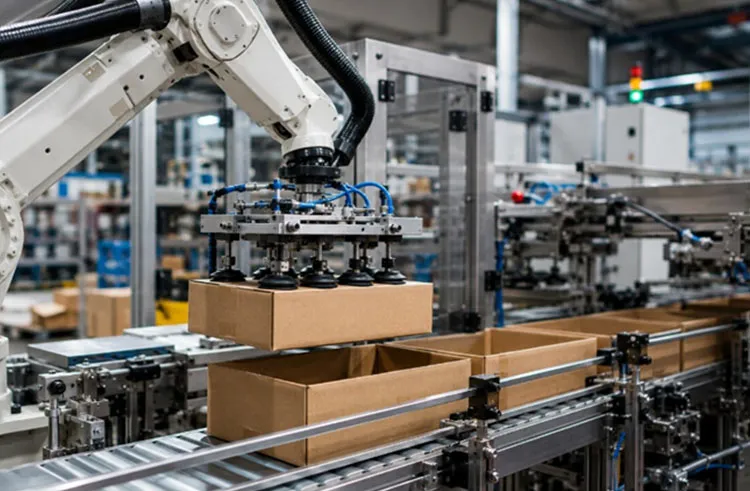
Automated Packaging Machines for Legacy Equipment

Many Australian manufacturers rely on production equipment that has been operating successfully for decades. While these machines may still perform their core function reliably, they often create bottlenecks in areas such as packaging, product handling and end-of-line operations.
The challenge for many businesses is that replacing an entire production line is expensive, disruptive and often unnecessary. Fortunately, modern automated packaging machines can often be integrated with existing equipment, allowing manufacturers to improve productivity, reduce manual labour and increase efficiency without replacing assets that still deliver value.
At Process Evolution, we help Australian manufacturers modernise their operations by designing and integrating automated packaging machines that work seamlessly with existing production equipment. By combining local engineering expertise with practical manufacturing knowledge, we deliver automation solutions that maximise the value of current investments while preparing businesses for future growth.
Why Legacy Equipment Still Has a Place in Modern Manufacturing
Many manufacturers assume automation requires a complete factory overhaul. In reality, some of the most successful automation projects involve upgrading specific processes while retaining the existing equipment that continues to perform effectively.
Production machinery often represents a significant capital investment. If a filling machine, processing system, assembly station or manufacturing line is still producing quality products, replacing it simply to introduce automation may not make financial sense.
Instead, many manufacturers are achieving substantial productivity gains by introducing automated packaging machines around existing equipment. This allows businesses to address labour-intensive processes and production bottlenecks while preserving valuable assets.
For many Australian manufacturers, this staged approach delivers a faster return on investment and significantly reduces implementation risk.
What Are Automated Packaging Machines?
Automated packaging machines are systems designed to automate packaging-related processes that would otherwise require manual intervention.
These solutions can perform a wide range of functions, including:
- Case erecting
- Product loading
- Case packing
- Labelling
- Product inspection
- Carton sealing
- Palletising
- Material handling
Modern automated packaging machines can operate as standalone systems or as part of a fully integrated production line.
Unlike traditional packaging equipment that may be limited to a single product format, today’s automation solutions can often accommodate multiple products, packaging styles and production requirements while maintaining high levels of efficiency and reliability.
Can Automated Packaging Machines Be Integrated with Legacy Equipment?
One of the most common misconceptions about automation is that old equipment cannot work with modern technology.
In reality, many legacy production systems can be successfully integrated with new automation solutions.
Modern control systems, sensors, robotics and communication technologies provide numerous methods for connecting new equipment with existing machinery. Whether the equipment is five years old or thirty years old, experienced automation engineers can often develop solutions that bridge the gap between old and new technologies.
Successful integration requires a thorough understanding of:
- Existing equipment capabilities
- Production requirements
- Operational constraints
- Safety requirements
- Future expansion plans
At Process Evolution, we frequently work with manufacturers who want to improve efficiency while retaining existing equipment that continues to perform effectively. In many cases, integrating automated packaging machines can deliver significant improvements without the need for a complete production line replacement.
Benefits of Automated Packaging Machines in Existing Factories
Increasing Throughput Without Major Capital Expenditure
One of the primary reasons manufacturers invest in automated packaging machines is to increase production output.
Manual packaging operations often become bottlenecks as production volumes increase. By automating these processes, manufacturers can improve throughput without investing in entirely new production lines.
This allows businesses to maximise the performance of existing equipment while supporting future growth.
Improving Packaging Consistency
Manual packaging processes can introduce variability into operations.
Differences in operator technique, fatigue and handling methods can affect packaging quality and presentation.
Automated packaging machines provide consistent, repeatable performance, helping manufacturers achieve:
- Improved product presentation
- Reduced packaging errors
- Better quality control
- Reduced product damage
This consistency is particularly important for manufacturers supplying major retailers or operating within regulated industries.
Reducing Manual Handling Requirements
Many packaging tasks involve repetitive movements and manual handling activities.
Loading cartons, erecting boxes, packing products and palletising finished goods can place significant physical demands on operators.
Automated packaging machines reduce these manual tasks, allowing employees to focus on higher-value activities while improving workplace safety and reducing fatigue.
Enhancing Workplace Safety
Packaging operations often involve repetitive lifting, awkward movements and physically demanding tasks.
By automating these processes, manufacturers can reduce injury risks and create safer working environments.
Applications such as robotic palletising, automated case packing and material handling systems are frequently implemented to improve both safety and productivity outcomes.
Improving Operational Efficiency
Automation not only increases production speed but also improves overall process efficiency.
Automated packaging machines can operate consistently throughout a shift, reducing downtime, minimising errors and improving overall equipment effectiveness.
These improvements often result in lower operating costs and stronger long-term profitability.
Packaging Processes Commonly Automated
Case Erecting and Carton Forming
Many manufacturers still rely on operators to manually erect and prepare cartons.
Automated case erectors can significantly improve efficiency by forming cartons consistently and reliably while reducing labour requirements.
Case Packing and Product Loading
Case packing is one of the most common applications for packaging automation.
Robotic and automated systems can load products into cartons with speed, accuracy and repeatability, reducing manual labour while improving quality.
Labelling and Product Identification
Accurate product identification is essential for traceability and compliance.
Automated labelling systems help ensure labels are applied consistently and correctly while reducing the risk of human error.
Palletising and End-of-Line Automation
Palletising is often one of the most labour-intensive areas of a manufacturing operation.
Automated palletising systems can improve throughput, reduce manual handling and create more consistent pallet loads.
For many manufacturers, palletising automation represents one of the fastest opportunities to achieve a strong return on investment.
Material Handling and Product Transfer
Moving products between production stages can consume significant labour resources.
Automated conveyors, robotic transfer systems and product handling solutions help streamline material flow while improving overall production efficiency.
Key Considerations Before Automating Packaging Operations
Before implementing automated packaging machines, manufacturers should carefully evaluate several factors.
Product Variability and SKU Complexity
The number of products being produced can significantly influence automation design.
Manufacturers with multiple packaging formats, carton sizes or product variations require systems that can accommodate flexibility while maintaining efficiency.
Available Factory Space
Many automation projects occur within existing facilities where space is limited.
Effective automation design must maximise available space while maintaining safe and efficient operation.
Production Rate Requirements
Not every packaging operation requires high-speed automation.
Understanding current and future production requirements is critical when selecting the right solution.
Future Growth Plans
Automation should support future business objectives rather than simply solving today’s problems.
Considering future product expansion, production growth and operational changes helps ensure the solution continues delivering value for years to come.
Why Local Automation Expertise Matters
Successful automation projects involve far more than simply purchasing equipment.
Manufacturers need an automation partner who understands production environments, operational challenges and long-term support requirements.
Working with a local Australian automation company offers several advantages:
- Faster support and service response
- Local engineering expertise
- Compliance with Australian standards
- Easier collaboration throughout the project
- Long-term maintenance and optimisation support
When production is critical, having local expertise available can make a significant difference.
How Process Evolution Designs Automated Packaging Machines
At Process Evolution, we specialise in designing and building automated packaging machines for Australian manufacturers.
Our approach focuses on understanding the client’s production requirements, operational challenges and future goals before developing a tailored solution.
We provide complete project delivery, including:
- Concept development
- Engineering design
- Mechanical design
- Electrical design
- Control systems
- Manufacturing and assembly
- Installation and commissioning
- Operator training
- Ongoing support
Rather than forcing manufacturers to adapt their operations to standard equipment, we design solutions that integrate with existing production environments and support long-term growth.
Modernise Your Packaging Line Without Replacing Everything
Many manufacturers assume that modernisation requires replacing entire production lines.
In reality, some of the most successful automation projects involve integrating automated packaging machines with existing equipment to eliminate bottlenecks, improve productivity and reduce labour-intensive tasks.
By taking a staged approach to automation, manufacturers can improve operational performance while protecting previous capital investments.
Partner with Process Evolution
As labour challenges continue to impact Australian manufacturing, businesses are increasingly looking for practical ways to improve efficiency and remain competitive.
Automated packaging machines provide a proven pathway to increased productivity, improved consistency and enhanced workplace safety without the need to replace valuable production equipment.
At Process Evolution, we help manufacturers modernise their operations through tailored automation solutions designed, built and supported locally in Australia.
Whether you are looking to automate case packing, palletising, material handling or complete end-of-line operations, our team can help identify the right solution for your facility and your future growth plans.