
Flexible Capping Machines for Frequent SKU Changeovers

In today’s manufacturing environment, flexibility is no longer a “nice to have”—it’s essential. For contract manufacturers and brands running multiple products, the ability to switch between SKUs quickly and efficiently can be the difference between growth and stagnation.
This is where Flexible Capping Machines play a critical role.
Designed to handle a wide range of bottle types, cap formats, and production requirements, flexible capping systems are transforming how manufacturers approach end-of-line automation—especially in high-mix, low-to-medium volume environments.
The Growing Need for Flexible Capping Machines
Why multi-SKU production is becoming the norm
Across industries such as FMCG, personal care, and pharmaceuticals, product ranges are expanding rapidly. Brands are offering:
- Multiple sizes
- Different packaging formats
- Seasonal or promotional variations
This shift has made multi-SKU production lines the standard rather than the exception.
Challenges faced by contract manufacturers and brands
For contract manufacturers in particular, flexibility is critical. They must:
- Handle different client products
- Adapt to varying production schedules
- Maintain efficiency across frequent changeovers
Without the right equipment, this can lead to bottlenecks, delays, and inefficiencies.
The limitations of traditional capping machines
Traditional capping machines are typically designed for:
- A single bottle type
- A fixed cap format
- Minimal variation
When faced with multiple SKUs, these systems struggle—requiring manual adjustments, change parts, and significant downtime.
What Are Flexible Capping Machines?
Defining flexibility in modern capping systems
Flexible Capping Machines are engineered to accommodate a wide range of products with minimal disruption. Flexibility means:
- Quick changeovers between SKUs
- Minimal or no mechanical change parts
- Easy adjustment of key parameters
Key features that enable fast changeovers
Modern systems achieve flexibility through:
- Recipe-driven control via HMI
- Servo-driven adjustments
- Modular tooling designs
This allows operators to switch between products in minutes rather than hours.
Supporting multiple bottle and closure types
A truly flexible capping system can handle:
- Screw caps
- Flip-top caps
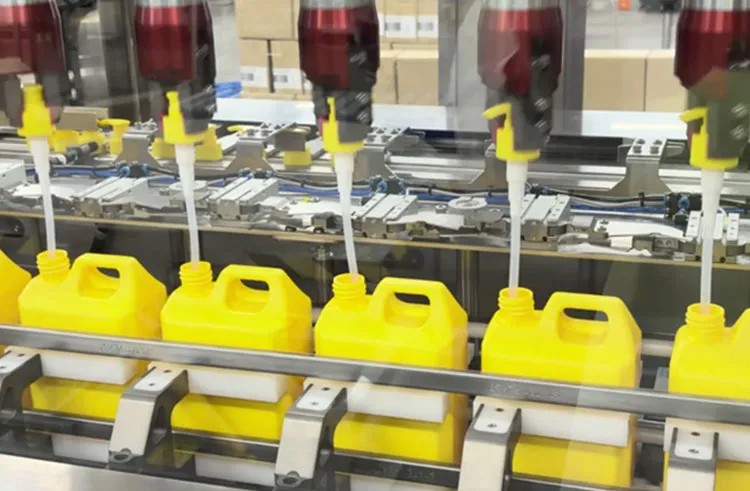
- Pumps and sprayers (including dip tubes)
- Press-on closures
This capability is essential for manufacturers working across diverse product ranges.
The Cost of Inflexibility in Capping Operations
Downtime caused by manual changeovers
Manual changeovers can significantly impact productivity. Each adjustment:
- Stops the line
- Requires operator intervention
- Introduces variability
Over time, this leads to lost production hours.
Increased labour and operational inefficiencies
Inflexible systems often require:
- Skilled operators for setup
- Additional labour during changeovers
- Ongoing supervision
This drives up operational costs.
Impact on throughput and production planning
When changeovers are slow and unpredictable, production planning becomes more complex. This can result in:
- Missed deadlines
- Reduced throughput
- Inefficient batch scheduling
Key Features of High-Performance Flexible Capping Machines
Tool-less or minimal changeover design
One of the most important features of flexible capping machines is the ability to:
- Eliminate change parts where possible
- Minimise manual adjustments
- Reduce reliance on operator skill
This improves both speed and consistency.
Adjustable settings via HMI and recipe control
Operators can select pre-configured recipes via an intuitive HMI, allowing:
- Rapid SKU changes
- Repeatable setup conditions
- Reduced risk of human error
Handling pumps, screw caps, flip-top caps, and more
Versatility is key. A high-performance system can seamlessly transition between different closure types without extensive reconfiguration.
Consistent torque control and application accuracy
Maintaining correct torque is critical for product quality and compliance. Flexible systems ensure:
- Accurate torque application
- Consistent sealing performance
- Reduced risk of leaks or failures
Designed for Contract Manufacturers and Multi-SKU Lines
Managing frequent product changeovers with ease
Flexible Capping Machines are purpose-built for environments where changeovers are frequent. They enable:
- Faster transitions between products
- Reduced downtime
- Improved overall efficiency
Maintaining efficiency across varied product formats
Whether running small bottles or large containers, flexible systems maintain consistent performance across formats.
Supporting short production runs without compromise
Short runs are often inefficient on traditional equipment. Flexible systems allow manufacturers to:
- Run smaller batches economically
- Respond quickly to demand changes
- Reduce inventory requirements
Integration with the Wider Production Line
Working seamlessly with filling, labelling, and packaging systems
A capping machine does not operate in isolation. It must integrate with:
- Filling systems
- Labelling machines
- Downstream packaging
Seamless integration ensures smooth operation across the entire line.
Managing bottle orientation and infeed consistency
Proper bottle presentation is critical for consistent capping. This may include:
- Bottle orientation systems
- Controlled infeed spacing
- Stable product handling
Ensuring smooth product flow and line balance
A well-designed system maintains line balance, preventing:
- Bottlenecks
- Product accumulation
- Unplanned stoppages
Local Expertise Matters: Australian-Built Flexible Capping Machines
Designed and engineered for Australian manufacturers
Working with an Australian automation provider ensures your system is:
- Designed for local conditions
- Built to suit your specific process
- Engineered with practical, real-world considerations
Faster support, service, and spare parts availability
Local support means:
- Faster response times
- Easier access to spare parts
- Reduced downtime
Compliance with Australian standards and safety requirements
Flexible Capping Machines must meet Australian standards, including:
- Machinery safety (AS 4024)
- Electrical compliance
- Industry-specific requirements
Local expertise ensures compliance is built into the system from the start.
How Process Evolution Approaches Flexible Capping Solutions
Engineering systems around real production challenges
At Process Evolution, we start by understanding your process:
- Product range
- Production requirements
- Operational challenges
This allows us to design solutions that deliver real value.
Combining standard platforms with bespoke innovation
Our approach combines:
- Proven standard platforms
- Custom engineering where required
This ensures the right balance between cost, flexibility, and performance.
Proven results across diverse industries
We’ve developed flexible capping solutions for:
- Contract manufacturers
- FMCG brands
- Personal care and chemical products
Each system is tailored to suit the application.
When to Invest in a Flexible Capping Machine
Signs your current system is limiting performance
You may need a flexible solution if:
- Changeovers are slow or complex
- You rely heavily on manual adjustments
- Your system struggles with new SKUs
Evaluating ROI for flexible automation
Flexible Capping Machines deliver ROI through:
- Reduced downtime
- Lower labour requirements
- Increased throughput
Planning for future product expansion
Investing in flexibility today ensures your system can:
- Handle future product variations
- Scale with your business
- Adapt to changing market demands
The Future of Flexible Capping Machines
Smarter automation and digital integration
Future systems will increasingly incorporate:
- Data tracking and analytics
- Remote monitoring
- Predictive maintenance
Increased demand for agility in manufacturing
Manufacturers will continue to prioritise agility—making flexibility a key competitive advantage.
Building scalable, future-proof production lines
Flexible Capping Machines are a critical component of:
- Scalable production systems
- Future-ready manufacturing facilities
Final Thoughts: Flexibility Is a Competitive Advantage
Why flexibility drives efficiency and growth
Flexibility enables manufacturers to:
- Respond quickly to market changes
- Improve operational efficiency
- Reduce costs over time
Moving beyond rigid, single-purpose machinery
Rigid systems limit growth. Flexible automation opens up new opportunities.
Taking the next step towards flexible automation
If you’re running multiple SKUs or planning to expand your product range, investing in Flexible Capping Machines is a strategic move.
With the right system—and the right partner—you can transform your production line into a more efficient, scalable, and future-ready operation.